Declaration of the General Convent of the Hungarian Reformed Church regarding the Reformed Christian Calvinist Church in Croatia
The presidency of the Hungarian Reformed Church’s General Convent – confirming its previous position – declares that the Reformed Christian Calvinist Church in Croatia (RCCC) and its leadership, Bishop Lajos Csáti Szabó and Lay President József Kel, whose elections were witnessed by General Convent legal representatives, are recognized as the lawful representation of the Hungarian reformed community in Croatia. The Convent has already expressed this standpoint on 29 October 2011, when the leadership, bishops and lay presidents, of all its church districts took part in the induction of the bishop and lay president of the RCCC. The recognition was furthermore confirmed by the decision made on 28 June 2013 session of the Hungarian Reformed Church’s common synod, when it admitted the RCCC as its member, joining the Hungarian reformed community in the Carpathian Basin.
The General Convent’s presidency was pleased to hear that during their visit in Croatia from the 7th to 9th of March 2014, Gustav Adolf Werk’s (GAW) president, Dr. Wilhelm Hüffmeier, and the organization’s general secretary, Enno Haaks, visited the RCCC’s congregations. We would like to express our satisfaction that after the meeting and negotiations between GAW’s representatives and the RCCC leadership, Bishop Lajos Csáti Szabó and Lay President József Kel, it was decided that the organization has re-established contact with the RCCC and will support the service of the local reformed community. We were also informed that GAW would like to formally clarify its relationship with the reformed community of Croatia in this painful situation, which is still being affected by previous divisions. In this respect, the presidency of the General Convent supports GAW’s decision whereas the RCCC is recognised as the absolute representative of the reformed people in Croatia.
With gratitude to God, we received the report of GAW’s president and general secretary and their positive decision regarding the RCCC. We co-operate with GAW and other international organizations with a prayerful heart, in order to help in the renewal of the reformed community in Croatia still suffering from the trials of history and inner divisions.
Reformed Church in Hungary
Reformed Christian Church in Slovakia
Reformed Church in Transcarpathia/Ukraine
Reformed Church in Romania
Reformed Christian Church in Serbia
Reformed Christian Church in Slovenia
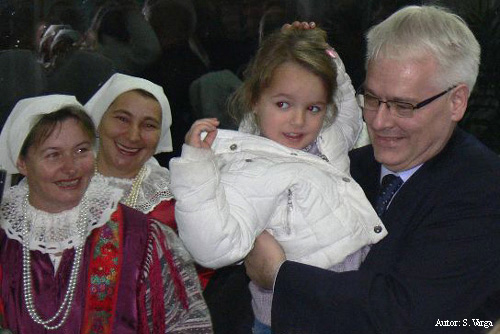
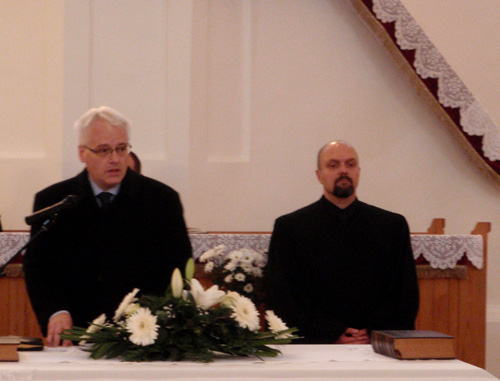
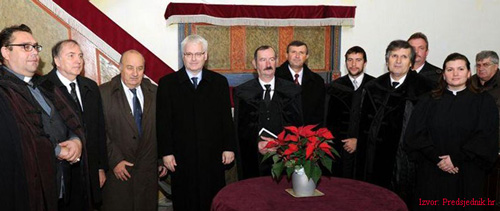
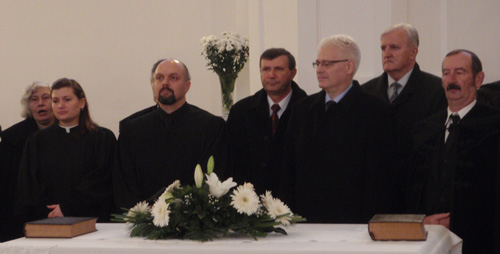
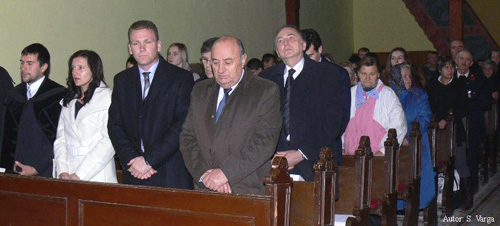
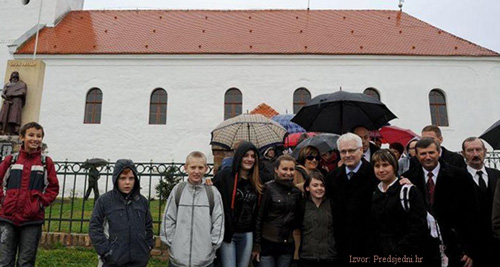
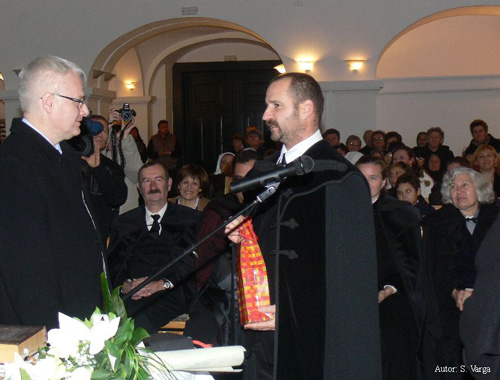
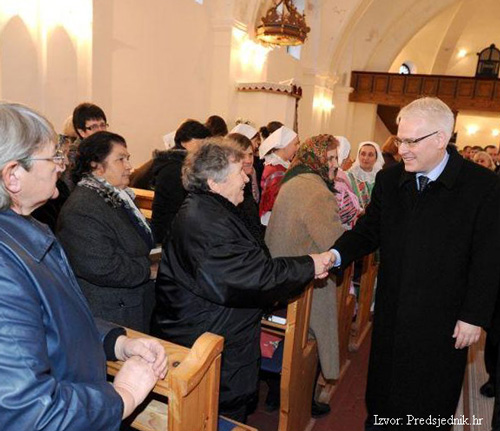
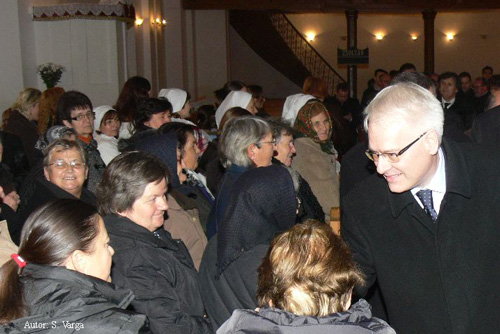
On the 30th of November 2012 the president of the Republic, Ph.D. Ivo Josipović, visited the Church. He attended the service and program in Lug and Korog organised by the Reformed Church in Croatia and stayed there from 1 pm until 5 pm. The attendants were: believers, pastors, and from the social sphere guests: the parliament representative Mr. Deneš Šoja, the county prefect Mr. Božo Galić, the president of the local committee mrs. Ružica Bilkić and Mr. Istvan Tokai and the representatives of the Orthodox Church Mr. Dobrivoj Filipović and Nenad Lazić.
A pertinent meeting was held in the church in Lug, where the President addressed everybody present after listening to a lecture on the history of Lug. A service was held in Korog, followed by guest speakers from the social sphere and the President. Succeeding these events, an apposite program was held at the Cultural Centre and the school. The church in Lug was damaged during the occupation and Yugoslav communist war against Croatia (1990-1994). Korog was completely destroyed, the church gravely damaged and the residents were sent into exile, their properties plundered. Many of them were defending their Homeland.
The president offered support and encouragement to the gathered in his speech, which he gave at both places. In Lug he said the following:
“Dear bishop and priests! Dear citizens of Lug!
I cordially greet you all in Lug, in your beautiful church of which I have heard it is the oldest Calvinistic church on Croatian territory. The religious tradition of the Reformation, which exists in Croatia for over four centuries, and to which you belong, is a vital part of the Croatian religious and cultural identity. Croatia is a country of religious rights and religious freedom. Therefore I have always emphasized the importance of respecting the particularities of various traditions and the importance of strengthening inter-religious initiatives. This is particularly important in areas such as this part of Slavonia, where there are members of multiple ethnic and religious communities.
All religious communities in Croatia promote the same moral values which are also the basis of every democratic society. They encourage people to live together judiciously, to work together in an atmosphere of mutual trust and shared hope for the future. And you, followers of the Reformation, have shown precisely that during all these years. You show how one lives and works in Croatia for the country’s benefit. I wish you and your families all the best.”
In Korog, he said the following:
“Dear bishop and priests! Dear citizens of Korog!
I cordially greet you in your heroic place, which, despite the trials and tribulations that you have suffered during the war and the problems which have accompanied you in the post-war period, is rebuilt, appealing, with a beautiful, restored church of which I have heard it was gravely damaged during the war.
I am glad to see your joyful faces which testify, that despite all the difficulties, you have faith in the future and that your religion is helping you. The Reformed tradition is one of the religious traditions which has existed in our country for centuries and has enriched the Croatian cultural identity with its particularities and ethical values, which is part of the common Croatian spiritual and cultural wealth. Croatia is a country of religious freedom, religious and ethnic equality and with my presence here, I am letting you know that your small community, in this beautiful part of Croatia, matters.
You have proven that it matters by your courageous fight for your homes and by returnig home. I have come here to thank you for showing all these years how one lives and works in Croatia for the country’s benefit. I wish you and your families all the best.”
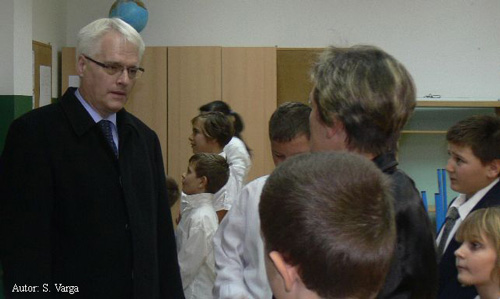
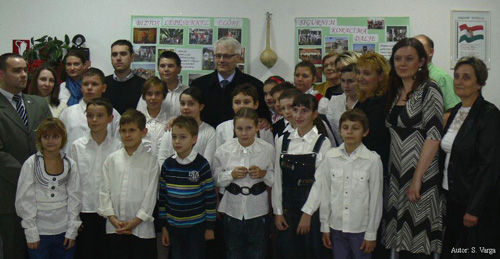
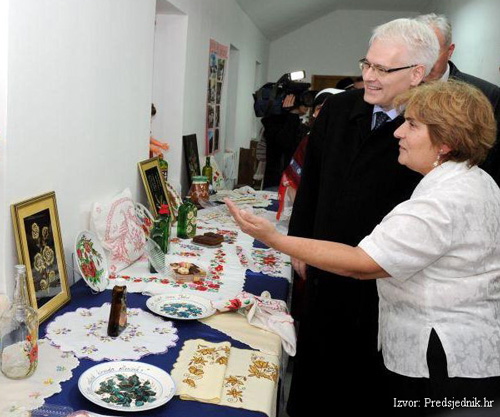
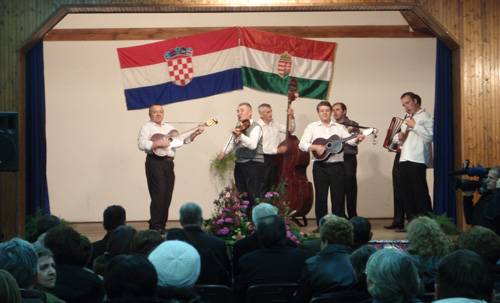
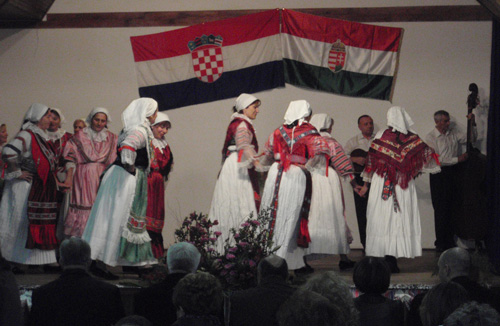
The president stayed to talk with those present, attended the cultural arts program, he saw craftswork made by the women from Korog and visited the local Hungarian- minority school.
The bishop Lajoš Čati Sabo, in his address, emphasized the following: “I am certain that this day is both for me and all present a holiday, as you have honored us with your visit, here amidst the consecrated walls of the Reformation. I greet you with love and the most sincere respect here in our community. (...)
You care even for the least ones entrusted to you, just as the Lord Jesus Christ has cared even for the smallest flock of God. Your remembrance of the Reformation bears witness to that, as well as the meeting you organized in Zagreb a month ago. We can learn from you how to respect Christian values brought about by the Reformation.
Allow me to say a few words about the aggression that has affected the church community. On the 12th of January 1993 the occupiers were celebrating the New Year. They wanted to show "the Light of Bethlehem" by burning down the church. The village was without electricity and water, however, despite the dark night, regardless of religious affiliation, villagers were able to collect enough water to extinguish the fire. They have only managed to inflict severe damage to the organ and which, thank God, we were able to repaired.
For the fact that our church, which is also a cultural monument, has been restored externally, as well as its environment, we owe thanks to: the state of Croatia, the parliament representative Mr. Deneš Šoja, senior adviser for the preservation of cultural monuments Drago Kretić and the president of the local committee Istvan Tokai. Static measurements are currently being made, because cracks occurred in several places on the walls of the church. Hopefully, we will be able to solve these problems as well, so that God's holy name will continue to be worshiped within these walls for a long time.
A lecture on the history of Lug was given by prof. Ph.D. Karol Labadi. We highlight the following: "Lug is a cradle of famous European preachers and scholars. Lužanin Demeter was born here, who was probably a pupil of the local Franciscan monastery. His Codex can be found in the Franciscan Monastery in Šibenik, where the second oldest Hungarian linguistic and literary monument was found in his manuscripts. Ožvald Lužanin was also born here, who, in his days, was known in Europe for his sermon collections. Janos (John) Lužanin was also born in this village in the 16th century. In literary history he is recorded as the translator of Aesop. Lužani Čokaš Peter wrote the Hungarian text in ten Calepinus language dictionaries, and the list could go on and on.
Mihael Starina began to preach the faith of the gospel and the teachings of the Reformation here in the 16th century. Since then, the residents of the village have been keeping and living the religion of the Reformation. While Starina was living here, he translated the Psalms into Hungarian, wrote books on biblical history and drama, also in Hungarian. It can be said that Lug is the birthplace of Hungarian poems and drama. However, the economic and cultural significance of the village began to decline after the Danube withdrew from the village. The Hungarian minority that lives here has always been attached to their homeland and has preserved the rich culture that it has inherited.
During the aggression, when the enemy set the church on fire, the residents of the village, lead by their priest (the current bishop), risked their lives putting out the fire in order to save the church - was pointed out in the lecture.
With his arrival the president has demonstrated that the Republic of Croatia respects the rights of religious minorities and sympathizes with the reformed believers, some of whom as members of a minority community also endured the burden of defending and rebuilding their homeland, and he is truly the president of all citizens regardless of their religion or any other distinctiveness.
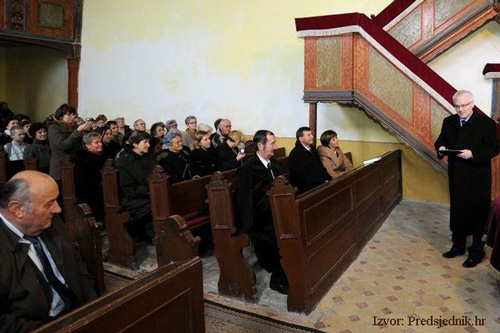
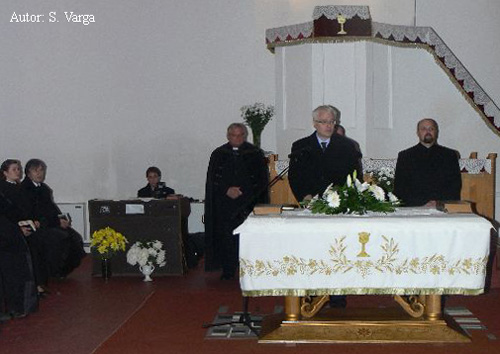
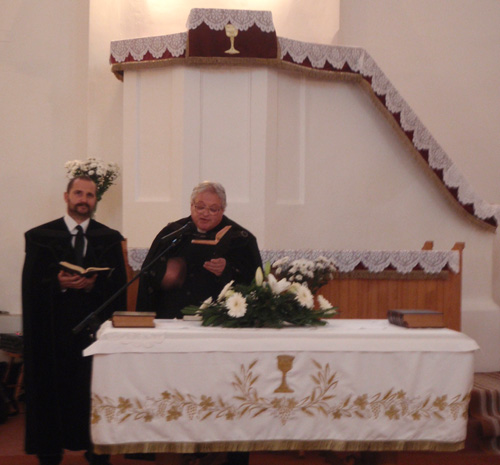
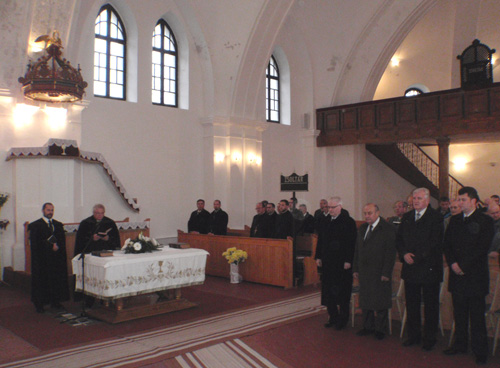
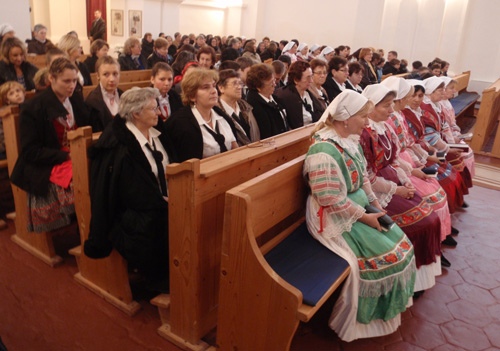
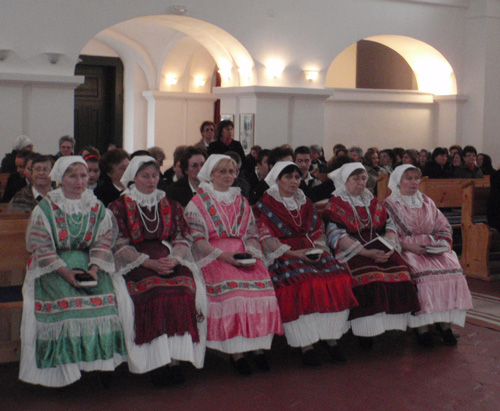
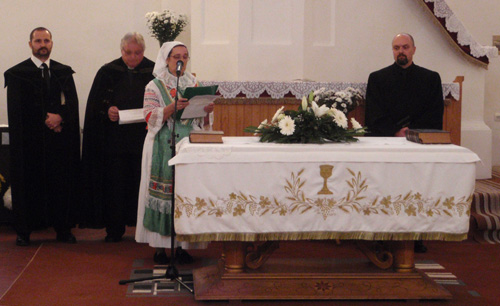
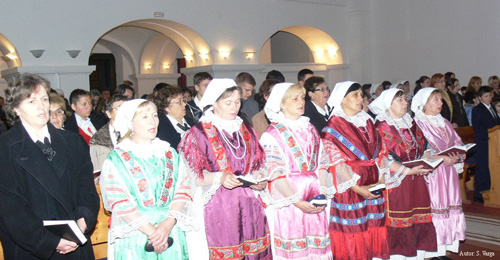
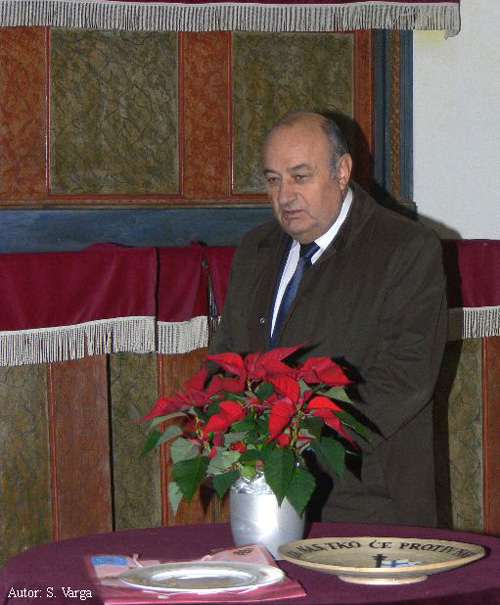
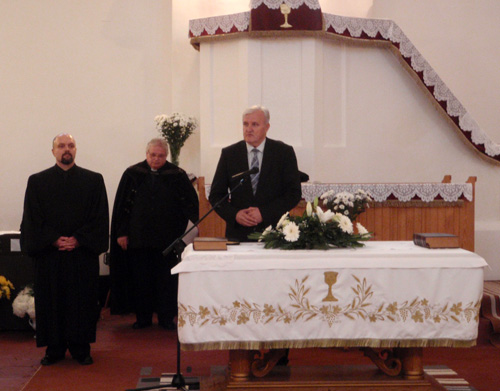
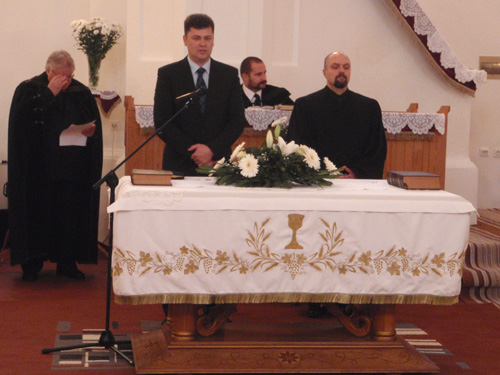
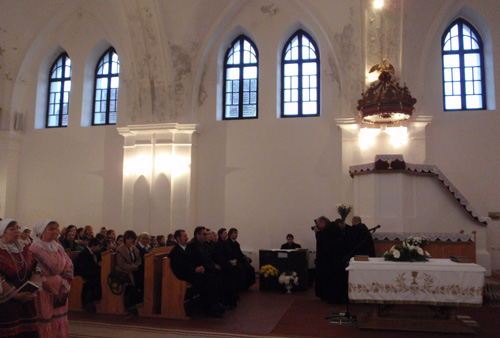
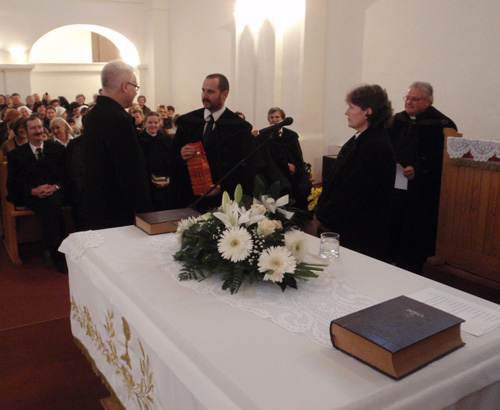
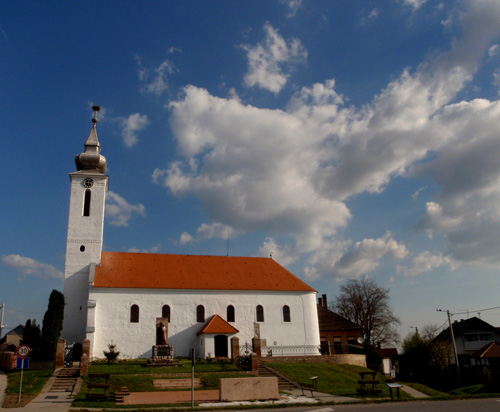
The Synod of the Reformed Church was held in Lug (Baranja) on 9th of April 2011. The representatives of the Local Congregations as well as the ministers of the Church attended the event. Regardless the size of congregation, every congregation has a right to vote with one representative. The Synod is the highest and legislative body of the Church. The Synod has the right of final decisions and opinions in all questions concerning the Church.
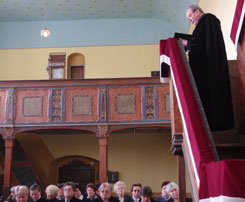 The Synod started with Worship lead by Rev. Andel Karoly, who preached from the Gospel of Luke 19:11-26. His assistant was the local pastor and the Senior of the Baranja Seniority Rev. Lajos Csáti Szabó. After Worship, ministers and credentials were counted. The Synod was lead by bishop Rev. Endre Langh. All representatives accepted the Timetable.
After intesive time of prayers, talks and adjustments of opinions, and thinking about future of Reformed Church, The Synod Council suggested the Agenda, based on suggestions of the ministers and congregations. Following a careful deliberation based on the suggestions of the ministers and the opinions of the congregations the Synodic Council suggested the candidates who are to take services in the Church for the next six years. The following minsters and lay people have been confirmed with a vast majority of votes casted by the members of the Synod to take services in the Church, respectively:
Reformed Church in Croatia is the oldest protestant Church in Croatia, tracing its roots in the 16th century Reformation. First religious communities where established 1540s, and the first Synod was 1550s. Reformed Church in Croatia is multiethnic religious community, the members are Hungarians, Croats, Czechs, Slovaks, Germans, Austrian etc. Multi-ethnicity represents the richness of our Church and truly depicts our mission.
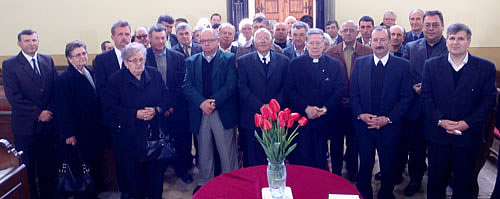
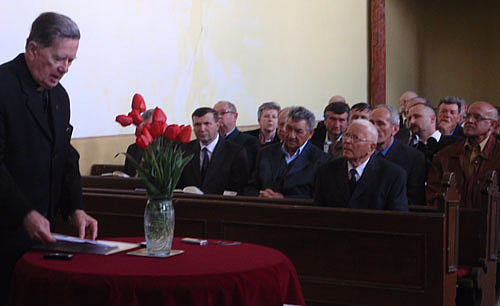
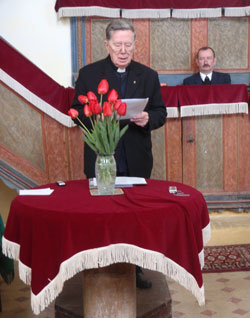
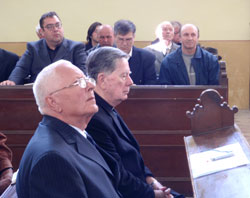
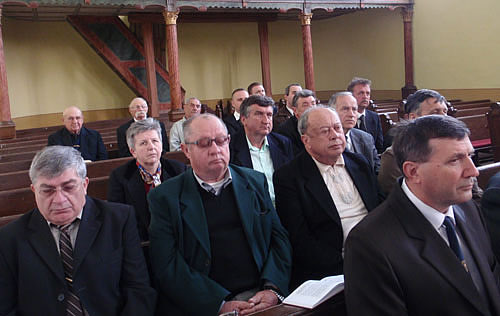
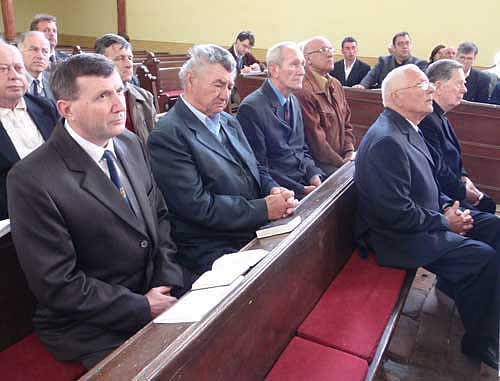
This article provides a brief overview of the activities of the Reformed Christian (Calvinist) Church in Croatia for 2010.
It should be noted that the Reformed Church is a historic religious community whose confessional identity stems from the 16th century Reformation. It has been functioning in an organized manner in the Croatian territory since the 16th century. Its confessional identity is based on Scripture and the entire Christian tradition which is Biblically supported. Reformed believersworship one God in Trinity, and Trinity in Unity, neither confounding the Persons, nor dividing theSubstance. Proclamation of the Good News, the Gospel message of Christ, is the foundational mission of the Church. The Doctrine of Scripture, as explained in the confessions and presented in “About us,” is the foundational doctrine.
The Reformed Church in Croatia is the oldest community of Reformed (Calvinist) confession in Croatia, unites 24 church parishes and 17 communities of believers, is organized according to the presbyterian-synodal structure and is organized into two Seniorats.
The Reformed Church is a supranational religious community. Members are Croatian, Hungarian, Czech, Slovak, German, Austrian and others. Multi-ethnicity is our richness, an indicator of the true mission of the Church.
Although the Reformed Church is a small religious community in Croatia, by European and worldwide measurements, it is one of the largest organized churches. The Church is a member of several international associations, including: the World Communion of Reformed Churches, the European Communion of Reformed Churches, the Community of Protestant Churches in Europe, the European Fellowship of Reformed Churches, the World Council of Churches, and the Conference of European Churches. In Croatia, it is a member of the Ecumenical Church Council and the Croatian Bible Society. It is involved in ecumenical efforts and inter-religious dialogue.
The Relationship between the Republic of Croatia and Church
It should be noted that we have satisfied the constitutional and legal framework which enables the unhindered work and activities of the church within the framework of the Republic of Croatia without interference of politics in the life, work and activities of the Church.
Since signing the Contract on Common Issues and Interests with the Republic of Croatia (2003), we have noted better and better cooperation and respect. As the process of democratization and Europeanization advances, the more it can be said that our existence in Croatia has a positive future.
So far we note a positive relationship with the Croatian Parliament, the government, the Office of the President, some local officials and especially the actions of the government’s Religious Affairs Commission, whose activities are affirmative, professional, positive and commendable. All of the above mentioned rightfully gives us the impression that standards are being adopted in Croatia that will ensure religious minorities like ours the possibility of affirmation and life.
Communist Sins
Since the public is unaware, it should be noted that during communist rule, Reformed Church property and many schools were confiscated and some cemeteries were destroyed. Since most of our assets were purchased with gifts from the faithful, the activities of the communist government should be referred to as systematic, organized looting.
After the democratic changes, a sense of awareness began to mature that ill-gotten gains hurt everybody, and Croatia began the process of returning stolen property by communists. Correcting the crimes and injustices caused by the communist government will never be completed; however, positive changes have been noticed and we are pleased to report that part of our property has been returned, particularly in Slavonija and Baranja. So far most of the property has been returned to the following church parishes or former parishes: Nijemci, reparation in Jankovci and Cacanci, Velika Pisanici, Brekinska, Kopacevo, Bilje, Vardarac, Lug, Knezevi Vinogradi, Karanac, Kamenac, Kotlina, Suza and Zmajevac. Unfortunately, since some of the parishes have been closed with the faithful moving away or run out, most of the property will never be returned and remain a lasting memorial to that diabolic system.
Although the history of the Reformed Church is imbued with social isolation, it must be admitted that the trend is changing for the better. We are still far from standard practice and life without complaints: however, great progress for the better can be observed. It should be noted that every little incident leaves a lasting and bitter taste because it concerns a vulnerable social group whose uniqueness causes its multilayered isolation. We must point to the occasional awkward situation of church members who are also members of ethnic minorities. They are often isolated threefold: linguistically, ethnically and religiously. That is seen as disadvantageous instead of as an asset in some particular passive regions. It should be noted that from time to time our faithful Croats are pressured because they are not good enough or “real Croatian” because they do not belong to a mayor religious group. These examples, unfortunately, witness to the fact that there is still much room for change in consciousness and behavior and for the education in the basic facts of our history.
The War of Independence and its Consequences
Unfortunately, during the War of Independence and the Great Serbian and jugo-communistic aggression that accompanied it, a large number of our faithful was displaced and in exile and in need of humanitarian aid. Many lost their homes, and their property was looted and destroyed. Many church buildings were destroyed, and the property looted. With respect to the damage incurred during the war, the destroyed and looted property, the Reformed Church was the most affected religious group on a per capita basis. After the liberation and return of the occupied territories, restoration of communities was begun in the region of Slavonija and Baranja, where the largest concentration of our members live. Unfortunately, from the beginning, the process of restoration went without state support. Help came from believers in sister churches from abroad. Today the situation is quite different and we see a great deal of help coming from the state. Unfortunately, many facilities are still in bad shape and some are completely destroyed and awaiting renewal, as is the case with the Reformed Church in Bilje.
While we ourselves have many difficulties, we are aware that there are many who find themselves in much more difficult situations. Therefore, in accordance with our abilities, the Church’s charitable activities are aimed at providing support and assistance to the church members, people with whom we come into contact, and institutions that are specialized for this purpose.
The Spiritual Life of the Community of Believers
The spiritual life of the church is organized around the central activities of the church parishes: worship, Bible studies, prayer meetings, catechism, thematic lectures and conferences. These activities are organized at the parish and church levels.
The foundation of such spirituality is the worship service on the Lord’s Day, which is our greatest holiday because it was founded by God, and on other major Christian holidays associated with the work of God’s salvation in Christ. Believers are encouraged to practice faith in their own lives through prayers and Bible study, but Sunday worship is the foundation of religious life.
The study of Scripture within the community is another important backbone of the spiritual life of the community. Parishes that have organized, constant pastoral care organize Bible studies during the week as a part of the spiritual formation of the believers.
Prayer meetings, women’s meetings, catechism instructions and various classes associated with religious and historical identity are often organized within the parishes.
The Reformed Church has many ethnic minorities (the most numerous of which are Hungarian). In order to respect their heritage and identity, meetings and lectures that affirm their uniqueness are often organized. The model of integration of minorities has been present in the Reformed Church for many centuries. It has tried to protect and promote the uniqueness and needs of its members, even though it has not always been easy to achieve. Having used these types of activities for a number of centuries, we continue to integrate and preserve the special minorities.
The Catechetical Office for Youth and the Reformed Women’s Association
Work with children and youth takes place at the parish level and through the Catechetical Office for Youth (Katehetski ured za mladez KUM).
Parishes, depending upon their capabilities and the number children and youth, organize catechism and programs aimed at spiritual, intellectual and emotional development. The purpose of this work with children and youth is to implant fundamental religious truth, confessional identity, and a connection to culture and tradition. This year KUM organized three children’s and youth camps during the summer months. During the past year we did not note any state related problems related to the implementation of religious education in the school.
The problems that occasionally come up are associated with the formation of misconceptions and misinformation. So we can conclude that awareness is developing all the more, and we see that the practice of all the citizens of our country, including religious minorities, is equal. We consider that to be a great step forward in a positive direction.
The Reformed Church seeks to involve all members of the community and to give them affirmation in the Church. In this sense, it is promoting gender equality at a real and not just a declarative level. All believers are equal in spiritual and ecclesiastical life. Members have opportunities to participate actively in the pastoral ministry and in decision making in accordance with God’s call and gifts. Active members, regardless of gender, have the right to vote at the local level and in the presbytery of the church parishes as well as at the national level in the Synod, which is the highest body of the Church. All believers, regardless of gender, are entitled to exercise any pastoral ministry in the Church.
Work with women is organized by the Reformed Women’s Association (Reformirana udruga zene RUZA). Ruza organizes activities and meeting with the intention of integrating and affirming women in the Church. In this regard, it regularly organizes conferences and meeting to affirm women’s issues within the Church.
Ecumenism and Intercommunion
The Reformed Church encourages and promotes ecumenical efforts. Since the Church has been involved in the ecumenical movement from the beginning as one of the founders of the effort, we believe that ecumenism, as understood in the traditional Protestant church, has no alternative and is the basis for building a better and more just society.
Therefore, ecumenism has a future where it is understood as the possibility of creating common Christian activities along with the respect of confessional identity and tradition. In this regard, we must emphasize that we are, generally speaking, satisfied with the ecumenical efforts. Unfortunately, we cannot help feeling that ecumenism in this region has not yet transcended the consciousness that could be summed up in the simple words, “everyone must be the same under the same administration.” This form of ecumenism is a reflection of the totalitarian mind which has unfortunately left deep scars in the religious communities. In this regard, there is much room for improvement of the ecumenical consciousness which respects diversity and seeks to live with it instead of proselytizing and assimilating.
Although cooperation with the Evangelical (Lutheran) Church does not belong to ecumenical cooperation, as the Evangelical and Reformed Churches are in theological and ecclesiastical agreement, we are talking about intercommunion cooperation. Unfortunately, due to our histories when politics exerted pressure on religious communities and created unnatural symbiosis and because of our common weaknesses, our relationship which has much potential does not enjoy its fruition. While cooperation exists, it should be greatly improved upon.
Cooperation with the Croatian Radio
Croatian Radio and Television (HRT), as a public service, is obliged to inform and promote minority religious communities and to meet statutory obligations in this area. Thanks to progressive journalists and the editorial board of religious programming for Croatian Radio, the informing and affirming of our communities on the national radio meet our expectations and, in our opinion, all legal obligations.
The editorial board of the religious radio program fulfills the basic purpose of its existence and, in our opinion, continues to be a public service for religious communities. In the near future, we expect a similar approach from public television.
Call and Encouragement
We call on all of the faithful in the Church to create conditions for spiritual and social reform by their spiritual devotions and actions. Reformed believers have left a big mark on the shape of European civilization. Calvinism, seen as a theological system and devotional practice, has left a long-lasting imprint on European and world civilizations. Because of that, we are imbued with a sense of gratitude to God; we are proud to be part of that heritage and will continue to affirm these values with our work and activities.
We call on all people of goodwill to promote justice, honesty, work, and education so that our country can move forward, genuinely, and not just declaratively, imbued with Christian values based on justice and respect for diversity and, thereby, creating conditions for social reforms. In regard to this, we encourage all people of goodwill to contribute to efforts to bring us into the EU, to finally return to the civilization to which we have belonged for the greater part of our history and to be a country of standards which are components of that social framework and heritage.
We have been praying to God for a progressive relationship with society for many years. Just when we thought that positive social processes and reforms, including the removal of several decades of social neglect, corruption, and crime, were in vain, the process of Europeanization began to gain momentum. We see this as a huge step forward and a way into a society that will be founded on law and a legal system of values which unfortunately has not yet come to fruition. Such a system did not exist during communism. The negative communistic trend deepened further during transition and remains present even today.
Against our moral will, but for the societal good and our children’s positive future, the advanced EU countries are teaching us that the world view must be lived, and not just declared. Positive values and laws are not to be proclaimed and enacted because of others, but because of us. Therefore, there should be the smallest gap possible between that which we desire and that which we are. All of this, unfortunately, we must now learn and adopt from others because we did not have the strength or moral determination to confront ourselves, work on our weaknesses, and abandon the totalitarian Balkan heritage.

The Mission of the Church is to witness about faith in God and to teach the truths of the Holy Scriptures as it is defined in the Reformed statements of faith.
In Accordance with our mission and the fact that Reformed Church in Croatia has been present and acting in Croatia for the past 460 years with the first Synod taking place in 1550 in Lug, we strive to be traditional yet work to meet the needs of present society. One should keep in mind that many of our church properties, more than 50%, were severely damaged or destroyed during military attacks, aggression and war lead by Slobodan Milosevic in the early 1990's and executed by the Yugoslav communist army under directions from the Serbian capital of Belgrade. With all this and the challenges that we see as a religious minority, we are trying to sustain and develop our Church with new programs join historical ideas and present reality.
Our activities are directed toward the spiritual renewing of believers, pastoral service and evangelism, where that is possible, as well as rebuilding destroyed and neglected church properties. Some of church properties that destroyed as mentioned above are still awaiting renovation, as is the case with the Church in Bilje. Some of church properties are in bad condition due to aging; such as Brekinska and Velika Pisanica, which are also awaiting renovation.
All our activities are designed to promote of Christian (Calvinistic) teaching and a system of faith and life. In that way we are participating in the spiritual regeneration of our homeland. We hold regularly organized worship services, prayer meetings, Bible classes for adults and catechism for children and youth, which is taught at the parish as well as in public school. The Church has organized different activities in order protect cultural traditions and uniqueness of people in different parts of our homeland as well as educational activities. We hold conferences and classes for women, elders and believers, as well as international conference as a part of the work of The Reformed Society of Women. So that our information, activities, and views can be presented to as wide a range of people as possible, we started an Internet project for our Church, as you see here. With special intention we observed the five hundred year jubilee of Jean Calvin's birth with national TV and radio coverage.
Our Church is organized in two Seniorats: Baranjski and Slavnoski. We have 24 Parishes and 17 communities of believers. Attendance at worship services and other activities of Church is not as high as we would like it to, but with prayer in our hearts and a desire to change, we are directing ministry to move these numbers in a positive direction.
We are always looking for people to prayerfully consider joining us in building God’s Kingdom in Croatia, both long-term and short-term. People interested should have a desire to serve and work with national leadership and be able to integrate themselves into a different culture and to learn a foreign language. We need English teachers, evangelists, outreach organizers and those interested in publishing literature and performing benevolence ministry.
2010 will be difficult economically and socially, as we are face the common problems of society and others problems that are connected with our specific religious heritage. To be more specific and to help you in thinking and acting on our behalf please keep the following prayer request in mind:
For more information about the Reformed Christian tradition with authentic and historical heritage in Croatia, contact us by E-MAIL.